
 (+65) 63161284



At a busy office, factory or commercial property, checking every arriving vehicle manually can quickly slow traffic at the entrance. Cards and tags remove some of that work, but they still need to be issued, replaced and managed.
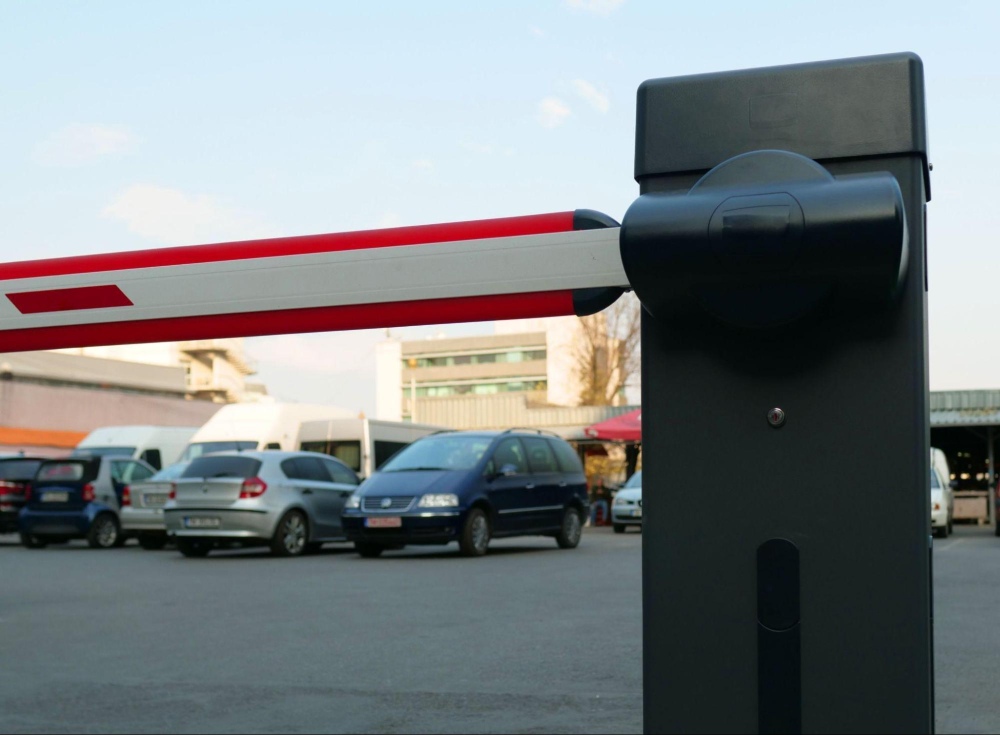
A License Plate Recognition (LPR) system uses the vehicle’s licence plate as its identifier. Cameras read the plate as a vehicle approaches, the system checks it against the configured access rules, and an authorised vehicle can be admitted automatically through an integrated car park barrier.
What Is the LPR System?
License Plate Recognition, also known as Automatic Number Plate Recognition (ANPR), is technology that detects and reads vehicle licence plates from camera images.
It combines specialised cameras with Optical Character Recognition (OCR) software that converts the plate’s characters into searchable digital data. A license plate recognition system is typically installed at vehicle access points such as barriers, gantries, and gated entrances.
An LPR system is commonly used for:
- Vehicle access control at commercial buildings and industrial sites
- Car park management in high-traffic facilities
- Gated communities and condominiums, managing resident and visitor vehicles
- Facility security logging, recording every vehicle movement automatically
Unlike a card or RFID system, the driver does not need a separate physical credential inside the vehicle. The registered licence plate itself is used for identification.
How Does an LPR System Work?
An LPR system relies on five steps that happen automatically each time a vehicle approaches the barrier.
- Image Capture: High-resolution cameras photograph the vehicle’s number plate as it enters or exits the premises.
- Image Preprocessing: The captured image is enhanced through noise reduction and stabilisation so the plate is clearly readable.
- Character Recognition: OCR software extracts the alphanumeric characters and converts them into digital text.
- Data Comparison: The recognised plate is checked against a database of registered vehicles, which determines whether access is granted.
- Logging: Depending on the setup, the system can record the plate number, image, date, time and entry or exit point for later review.
Operating in real time, this automated check integrates directly with your car park barrier system. The moment an authorised plate is confirmed, the barrier lifts instantly, eliminating the need for physical access cards or tickets.
LPR vs RFID vs Season Parking Card
Facility managers usually choose between three approaches for vehicle access control: LPR, Radio Frequency Identification (RFID) and Season Parking Card. Each has a different balance of convenience, hardware cost, and administrative demand.
| LPR | RFID | Season Parking Card | |
| How it works | Cameras and AI-based OCR read the vehicle’s number plate automatically | A tag or windscreen sticker on the vehicle communicates with a gate reader by radio waves | The driver taps a physical card at the barrier terminal |
| In-vehicle hardware | None required | RFID tag or sticker fitted to every vehicle | Physical card issued to each driver |
| Admin workload | Database-based: add or remove plate numbers as vehicles change | Tag management: issue, track, replace, and collect tags across the vehicle fleet | Card management: issue, replace, and collect cards; track lost or shared cards |
| Weather performance | Can be affected by rain, fog, or poor lighting at night | Reliable across most weather conditions | Not affected by weather, but requires physical card contact at the terminal |
| Limitations | Dirty, damaged, or partially obstructed plates reduce recognition accuracy | Tags must be physically managed; lost or unrecovered tags remain a security gap | Slows entry at peak hours; shared or damaged cards are a common problem |
Of the three, the LPR system removes the physical credential from the equation entirely, since the plate itself becomes the identifier. That shifts the administrative task from managing cards or tags to managing a plate number database.
What Affects the Accuracy of an LPR System?
Recognition accuracy is not fixed. Several site conditions determine how reliably an LPR system reads a plate.
- Lighting: Headlight glare, shadows, direct sunlight and low-light conditions can affect how clearly a plate appears.
- Plate Condition: Dirty, damaged, faded, or partially obstructed plates are harder for the software to read correctly.
- Camera Positioning: Height, distance, and viewing angle determine how much usable plate detail reaches the camera. Manufacturers typically specify limits for mounting angles and capture distances.
- Vehicle Speed: Vehicles travelling faster are harder to capture accurately if the system is not configured for the approach speed.
- Environmental Conditions: Rain, fog, and reflections reduce image clarity at the point of capture.
High-quality cameras and OCR software help, but installation matters just as much as the hardware itself. A well-positioned camera with correct lighting will consistently outperform an expensive camera installed without regard for the site’s actual conditions.
Why Businesses Use LPR Systems
For facility managers, the case for license plate recognition comes down to five practical gains.
- Automated facility access: Removes the need for manual vehicle checks at entry and exit points, cutting bottlenecks at busy facilities.
- Stronger security: Only vehicles on the authorised list gain entry. Unregistered or flagged vehicles can be denied automatically.
- Accurate records with no manual input: Every vehicle movement is logged with a timestamp, reducing on human error and providing a reliable record for security reviews.
- Lower long-term cost: LPR avoids the infrastructure costs tied to card- or tag-based systems, making it a more economical choice over time.
- Configuration for different sites: The same LPR system can be set up for a corporate car park, an industrial site, or a condominium, depending on what the facility needs.
As a certified security system supplier in Singapore, Huntaway Security designs license plate recognition systems around the access requirements of each facility. Each installation is matched to the site’s traffic volume and layout before any hardware is specified.
Design an LPR System for Your Facility with Huntaway Security
License plate recognition technology changes how a facility manages vehicle access, pairing automated identification with an accurate log of every entry and exit. It offers a reliable alternative to manual checks, tags, or cards, without the administrative load those methods carry over time.
Contact Huntaway Security to find out how an LPR-integrated car park barrier system can be designed for your facility.