
 (+65) 63161284



A security risk assessment looks at a site before anyone starts deciding what cameras, barriers or access systems to install.
For a commercial or industrial property, that means walking through how people and vehicles actually move around the premises, checking which areas need tighter control and spotting places where the existing security setup may not be doing enough.
A side entrance that anyone can use, a loading bay outside camera coverage or a car park with no control over incoming vehicles are all examples of issues an assessment might uncover.
The point is to understand the risk first. Otherwise, a business can end up spending heavily on security equipment while still leaving important gaps untouched.
What Does a Security Risk Assessment Cover?
Physical security is much broader than whether a building has CCTV.
For example, a camera may technically cover an entrance but provide little usable detail at night. An access-controlled door may work well until staff routinely hold it open during deliveries.
The goal is to view the premises the way a potential intruder would, then flag where existing controls fall short. A loading bay with no camera coverage or a side door with no restriction on who can walk through are typical findings. These are the kinds of problems that are difficult to spot by looking at a product catalogue or floor plan alone.
And because workplaces change, the assessment should not be treated as something that is done once and forgotten. New tenants, renovations, additional staff or changes in how a site operates can all introduce different security risks.
Why Security Risk Assessments Matter
The biggest benefit is fairly simple: businesses get a clearer idea of where their security budget will actually make a difference. An assessment can pay off in other ways as well.
- Identifying Vulnerabilities: A security review uncovers weak points such as restricted areas accessible to unauthorised staff, server rooms with no access control, or internal zones with no nearby camera coverage. These gaps often go unnoticed until something goes wrong.
- Preventing Financial Loss: Theft, property damage and operational downtime carry direct costs. Addressing risks upfront is usually cheaper than responding after an incident.
- Protecting Employee Safety: Assessments identify physical threats to staff on-site, from unsecured entry points to areas where employees work alone without surveillance coverage.
- Meeting Compliance Obligations: Singapore’s Workplace Safety and Health (Risk Management) Regulations require employers to identify and control hazards on their premises. CCTV or biometric access data collected via access control systems is personal data under the PDPA, subject to obligations covering protection, retention limits, data breach notification, and access rights.
- Allocating Resources Effectively: Prioritising the highest risks prevents budget from going toward low-risk areas while genuine vulnerabilities remain unaddressed.
- Improving Emergency Preparedness. A clear picture of the likely threats lets a business plan its response in advance instead of improvising during an incident.
How to Conduct a Security Risk Assessment?
The exact scope depends on the size and layout of the premises, but the process generally follows six steps.
- Identify Your Assets: The first step in any security risk assessment is listing everything that needs protecting. That includes buildings, entry points, equipment, stock, vehicles and restricted areas such as server rooms or plant rooms.
- Identify Potential Threats: Consider external risks such as intruders and theft, and internal ones such as staff or contractors accessing zones they shouldn’t.
- Assess Current Vulnerabilities: Look at where existing measures fall short. Common gaps include side entrances with no access control, car parks with no vehicle barrier, and camera coverage that does not reach the full site perimeter.
- Estimate and Prioritise Risk: Weigh up the likelihood and potential impact of each security risk identified, so the most urgent issues get addressed first.
- Implement Appropriate Controls: Match each prioritised risk to a specific measure: access control at a particular door, camera coverage for a blind spot or a vehicle barrier at the car park entrance.
- Review Regularly: Reassess as the facility changes, new threats arise, and technology advances.
Turning Assessment Findings Into the Right Security Systems
Each type of gap points toward a specific category of equipment.
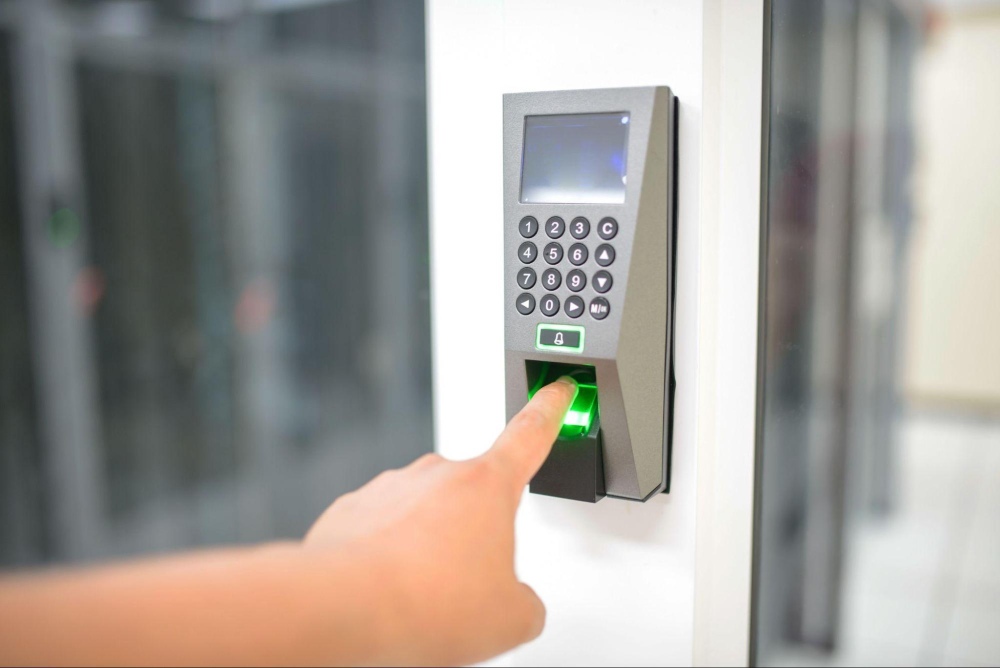
- Uncontrolled Entry Points: Calls for a door access control system with credentials matched to the sensitivity of each area, from card readers in general zones to biometric readers in restricted ones.
- High Foot Traffic: Sites with heavy foot traffic need a controlled entry point. Turnstile gates verify who can pass through and keep the flow moving without creating queues, which is why they are already in use at transport hubs and government buildings.
- Unmonitored Vehicle Access: A car park barrier system restricts entry to authorised vehicles and logs every movement.
- Coverage Gaps and Blind Spots: Call for a properly planned CCTV camera system, matched to the site’s actual layout and lighting.
- Attendance and Workforce Accountability Gaps: A time attendance system gives an accurate record of who was on-site and when, feeding directly into payroll and HR reporting.
- Degraded or Unreliable Existing Equipment: Needs a maintenance programme to keep installed systems performing as intended.
Get a Site Assessment From Huntaway Security
Buying security equipment first and figuring out where to put it later can create unnecessary cost without solving the underlying problem.
Huntaway Security provides CCTV, access control, car park barrier, turnstile and other security systems for businesses in Singapore. For systems that require installation, an on-site assessment can help determine where security controls are needed and which type of system is suitable for the premises.
That gives the business a much better starting point than choosing equipment based purely on specifications or what another property happens to use.