
 (+65) 63161284



Workplace security is not only about having CCTV cameras, access control systems or alarms in place, but also about how effectively these measures protect the people and areas that matter most.
For Singapore businesses, protecting a workplace means looking at how people enter the premises, which areas they can access, what happens after working hours and whether the security team has enough information to respond when something unusual occurs. These workplace security tips focus on practical measures that offices, warehouses, factories and other commercial premises can use to strengthen physical security without adding technology simply for the sake of it.
What is Workplace Security?
Workplace security refers to the physical systems, policies and procedures a business puts in place to deter, detect and respond to security threats. Technology is one part of it. Depending on the premises, that may include door access control systems, CCTV cameras, alarms, turnstiles and car park barriers.
The other part is how those systems are actually managed. Businesses need defined rules on who can access which areas, how visitor credentials are issued and what the reporting procedure is when an incident occurs. Without those rules in place, even well-installed systems leave gaps.
Why Workplace Security Matters
Under Singapore’s Workplace Safety and Health Act, employers must take practicable measures to ensure safe working conditions for their people. Controlling who can access the premises and monitoring for security threats are part of managing that responsibility.
Preventing a security incident costs less than responding to one. Replacing stolen equipment, investigating what happened and managing the disruption to daily operations all add up, often well beyond the value of what was taken.
What are Some Workplace Security Tips?
Each workplace security tip targets a specific vulnerability common to offices, factories and commercial facilities.
1. Control Who Can Enter Your Workplace
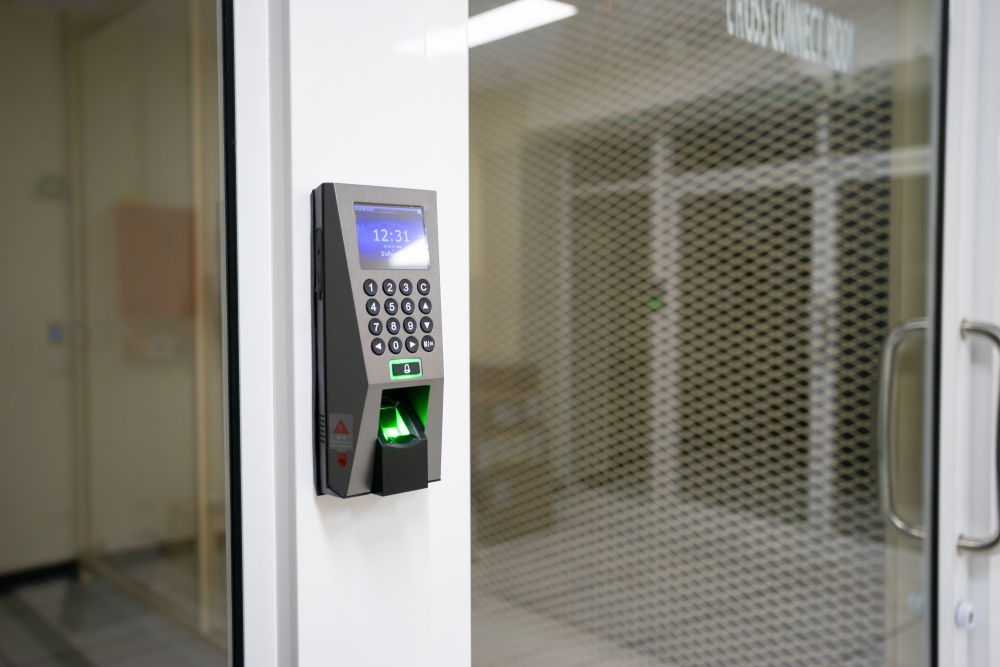
The first line of defence against unauthorised entry is credential verification at every entry and exit point. A door access control system lets businesses regulate who enters the facility and when, with a full access log providing a timestamped record for any investigation.
High-risk internal areas such as server rooms and stockrooms warrant a separate layer of control. Matching credential type to risk level is practical: access cards suit general zones, while biometric authentication is better suited to restricted areas where a higher verification standard is needed.
2. Use Role-Based Access to Limit Exposure
Blanket facility access creates unnecessary risk. Assigning permissions based on employee function, instead of issuing uniform credentials across the board, keeps sensitive areas limited to the personnel who actually need them.
The same logic applies to visitors and contractors.
Instead of issuing credentials that remain active indefinitely, temporary access can be limited to the relevant areas and period of the visit. Once the work or appointment ends, that access can be withdrawn.
3. Install Alarms and Sensors to Flag Incidents in Real Time
Motion sensors add coverage to areas that are not continuously monitored. When a restricted zone is breached outside operating hours, an alarm notifies security personnel immediately, without waiting until the following morning to discover what happened.
When alarms are connected to CCTV, the system automatically shows live footage of the area involved. This eliminates the need to locate the relevant camera feed manually. Remote alert capabilities ensure incidents are flagged even when no one is on-site. To maintain this level of response, alarms require regular testing and servicing; a sensor that has not been checked in months may not perform when it counts.
4. Strengthen Monitoring With a Well-Planned CCTV Setup
Installing more cameras is not necessarily the answer to poor coverage.
A useful CCTV camera system starts with the locations where incidents or unauthorised movement are most likely to matter. Depending on the site, these may include:
- Main entrances and exits
- Car parks and vehicle loading bays
- High-risk internal zones, such as server rooms
- Delivery reception areas and stockrooms
Modern systems go further. AI-assisted video analytics detect suspicious activity automatically and alert personnel in real time. When the CCTV camera system is integrated with access control, visual records are linked to access log entries, giving investigators a complete picture of any event. Once cameras are installed, keep them working. Loose wiring and unaligned lenses can reduce the usefulness of the system. A regular CCTV camera maintenance service can prevent system downtime and ensure footage quality stays clear.
5. Control Vehicle Access at Entry Points
Facilities with car parks or loading areas need vehicle access controls that match the same standard applied at pedestrian entry points.
A car park barrier system creates a controlled vehicle entry point. Depending on the setup, access may be linked to cards, remote controls, licence plate recognition or another authorised method. When paired with AI sensors and smart car parking systems, they improve their effectiveness as part of a larger security framework.
6. Train Staff on Security Systems and Reporting Procedures
Among all the security tips for employees, staff training is the one that affects how every other system performs. They should know:
- How to report an unfamiliar or suspicious person
- Where CCTV cameras are located across the premises
- The correct procedures for using access control points
- Their individual credential permissions and access limits
- Evacuation routes and response protocols
7. Conduct Regular Security Assessments
Facilities change over time. New teams, expanded operations, and physical renovations can each introduce gaps that the original setup did not account for. A regular security review, using a structured checklist, ensures the setup still reflects how the facility currently operates.
A practical assessment should confirm:
- Are the important entrances and higher-risk areas covered by CCTV?
- Are cameras recording clearly and pointing where they should?
- Is the access control system operational at all required entry points?
- Are restricted rooms protected appropriately?
- Are barrier systems functional and aligned with current access requirements?
- Have any workplace facility changes created gaps in existing coverage?
- Are alarm sensors and notifications working?
Any gaps found should be addressed through maintenance, system upgrades or expanded coverage before they become vulnerabilities.
Secure Your Workplace With Huntaway Security
Most security gaps come from systems that were installed without integration or left without regular maintenance. A site assessment identifies exactly where those gaps sit, before an incident does.
Huntaway Security is a Singapore Police Force-certified security system supplier with over a decade of experience in CCTV, access control, turnstile and barrier gate installations for commercial and industrial clients. Contact us for a site assessment and find out which systems best fit your workplace.